3.5 Reducing emissions
Climate change is no longer a distant scenario. Extreme weather, scarcity of resources and rising regulatory costs pose major challenges for companies around the world. Climate issues encompass all the impacts of business activities on climate change, the financial risks and opportunities of climate change for companies, and mitigation and adaptation measures. For the purpose of sustainable corporate development, the Emmi Group addresses the challenges associated with climate issues in a committed and responsible manner.
The Emmi Group conducts its reporting in accordance with the Swiss Federal Council’s Ordinance on Climate Disclosures for large Swiss companies. In doing so, it takes into account the recommendations of the Task Force on Climate-related Financial Disclosures (TCFD).
3.5.1 Governance
Governance of climate issues by the Board of Directors
Climate issues are an integral part of the responsibility, processes and decisions of the Board of Directors as part of its governance, in particular with regard to strategy reviews, risk management, due diligence in mergers and acquisitions, and the investment process of the Emmi Group.
The Board of Directors receives a report once a year from the Head Group Sustainability at an ordinary meeting on the performance, measures, outlook, risks and opportunities relating to sustainability; this includes climate issues.
In addition, the Head Group Sustainability briefs the Board of Directors’ Market Committee once a year in detail on a specific topic, such as the double materiality analysis. The Market Committee then thoroughly reviews this issue and prepares the decision-making process for the Board of Directors.
The results of the annual risk analysis (including climate-related risks) are also presented once a year to the Audit Committee, the Board of Directors and the CEO as part of the Group’s regular risk management process (see section 3.5.3 Risk management).
Management’s role in assessing and managing climate issues
The CEO has ultimate responsibility for entries in the risk register and appoints risk owners within Group Executive Management. Risk owners can delegate risk mitigation and risk assumption measures, but they remain responsible for developing and implementing the measures. The following climate risk owners are appointed at present:
The Chief Supply Chain Officer (CSCO) is responsible for environmental and climate risks along the supply chain and for overseeing decarbonisation measures. The Chief Financial Officer (CFO) is responsible for all issues related to Scope 1 and 2 GHG emissions, the assessment of financial impacts, and compliance with relevant reporting and disclosure requirements. The Chief Marketing Officer (CMO) is responsible for analysing and evaluating consumer trends and their impact on brand management, product strategy and communication.
The Head Group Sustainability briefs the Group Executive Management once a year at an ordinary meeting on the performance, measures and outlook with regard to sustainability, including a focus on climate-related matters. The Emmi Group’s sustainability strategy, which also covers climate issues, is an integral part of the annual strategy review by Group Executive Management. Any extraordinary topics (e.g. procurement of green electricity) are added to the agenda of the next monthly Group Executive Management meeting by the CSCO and addressed there.
At the operational level, climate issues are monitored by the Head Group Sustainability together with her team at Group headquarters and the local sustainability officers at the operational locations worldwide and in collaboration with external partners and experts.
Emmi Sustainability-TCFD-Governance-Modell
The Emmi Group’s current remuneration policy is generally not linked to climate issues. This will be rectified for 2026. Exceptions currently apply on a limited individual basis for the members of the Group Sustainability team, the Group Supply Chain team and some managing directors and Executive Vice Presidents in the market regions for whom annual sustainability or climate targets are set.
Remuneration report of the Emmi Group
Risk management and internal controls
3.5.2 Strategy
The Group strategy is focussed on creating long-term value. A core element of this is sustainability and therefore also climate concerns. The Emmi Group aims to reduce the impact of its business activities on the climate (particularly in the form of greenhouse gas (GHG) emissions), avoid the financial risks associated with climate change and seize the financial opportunities.
Identified long-term climate-related risks and opportunities
An analysis of climate-related risks and opportunities in line with the Emmi Group’s usual approach (see section 3.5.3 Risk management and Note 30 Risk management and internal controls in the notes to the consolidated financial statements) has shown that the greatest risks and opportunities should only arise within a long-term time horizon of more than ten years. A comprehensive analysis was last carried out in 2024. Minor adjustments were made in the 2025 reporting year. An update is planned for the coming reporting year. The seven areas with the highest long-term risks and opportunities identified in the analysis, taking into account their likelihood of occurrence and financial impact, are:
1. Increase in average temperature and water scarcity
Higher temperatures and changing precipitation patterns could make it more difficult for the Emmi Group to procure raw materials in future and therefore pose operational challenges. Key risk indicators are the average temperature, precipitation levels and fluctuations in milk production and prices. The risk is especially high in areas such as Tunisia or California, which already have high average temperatures or low rainfall. Changes in the average temperature patterns have already been observed there.
In other regions, such as northern Europe and Switzerland, the growing season could be extended, allowing more milk or cheaper feed to be produced. Such areas may also prove suitable for cultivating new crops such as soya, which could be exploited as a business opportunity.
2. Taxation of Scope 3 GHG emissions
The taxation of Scope 3 GHG emissions would be particularly relevant for the farmers who supply the Emmi Group. In total, 80% of these emissions are related to the milk that is purchased. As farmers would have to pay this tax, they would naturally adapt their milk prices to offset it. The Emmi Group believes it is highly probable that such a tax will be introduced in individual countries in the next ten years. This is particularly true in countries that have signed the Paris Agreement and are striving to achieve net zero. The list includes Spain, the Netherlands and Switzerland. Taxation could lead to price increases and milk volume losses for the Emmi Group.
However, if the Emmi Group succeeds in strengthening its relationships with farmers over the long term and selecting suppliers with a low GHG footprint, this development could also yield opportunities in the long term. For example, working with suppliers and farmers with a low GHG footprint could have a positive impact on the Emmi Group’s corporate image and thus attract new employees and consumers.
There is an additional opportunity associated with the origin of the milk: a large proportion of the milk used in Switzerland and Europe comes from grassland-based dairy farming in Switzerland, which has a relatively low GHG footprint compared to other countries. The Emmi Group also sees this as an opportunity to position itself in the market as both distinct and sustainable.
3. Biodiversity loss
Human activities, in particular agriculture, forestry and fishing, are one of the main causes of biodiversity loss and ecosystem degradation. This affects the stability and functionality of both climate and ecosystems and can lead to a negative feedback loop that exacerbates climate change and biodiversity loss. The risk of biodiversity loss is likely to increase over the next decade if current agricultural practices such as monocultures for feed production, intensive livestock farming and the heavy use of chemicals continue.
The potential financial impact on the Emmi Group would be significant, as raw material prices are expected to rise due to falling productivity and increasing volatility in the upstream supply chain. In addition, farmers would have to rely more on fertilisers and pesticides to offset the consequences of soil degradation, the decline in pollinators and weakened natural pest control, which, in turn, would increase production costs along the entire value chain.
Grassland-based dairy farming represents a major opportunity when pursued in the right location and in a sustainable way. It can increase biodiversity and improve soil quality and has the potential to increase soil-based carbon sequestration. This would also create opportunities for the Emmi Group to expand its portfolio to include more environmentally friendly products. While the initial cost of producing such products may be higher, they offer long-term financial benefits, such as premium pricing, stronger brand positioning, access to new markets and greater supply chain resilience.
4. Dynamic consumer trends
The Emmi Group recognises the importance of both dairy products and plant-based alternatives. Plant-based nutrition is on the rise in high-income urban communities. Despite the associated challenges in terms of consumer behaviour, the Emmi Group sees opportunities here. The diversification of the Emmi Group’s portfolio of plant-based products allows it to be more flexible in its response to evolving market needs. Even so, the reporting year saw a change in market trends: while the dairy products segment saw significant growth, the sale of milk alternatives slowed noticeably (Euromonitor, 2025). In the dairy products segment, the Emmi Group has been committed to promoting a sustainable dairy industry for many years. The goal is to reduce emissions along the value chain through targeted measures.
5. Impact of extreme weather events on the supply chain
Extreme weather events such as droughts, floods and forest fires will become more severe or more frequent in the future due to climate change. It is expected that this will have a significant impact on the Emmi Group’s supply chain. In southern regions, periods of drought will likely increasingly limit milk production and drive up milk prices. This may also cause shortages of commodities (such as coffee, cocoa, cereals and sugar) if farmers need to switch to drought-resistant crops as a means of diversifying their incomes. Moreover, forest fires could destroy production facilities in California and southern Europe.
6. Costs relating to the taxation of Scope 1 and 2 GHG emissions
The Emmi Group believes that taxes related to Scope 1 and 2 GHG emissions are likely to increase over the next ten years. This is especially the case when stricter measures such as the Swiss Federal Act on Climate Protection Objectives, Innovation and Strengthening Energy Security [KlG] take effect in Switzerland and are gradually extended to other European countries. Geographically, European countries would therefore be most affected. The Emmi Group would be at a competitive disadvantage if it incurred higher costs from taxation than its competitors.
7. Packaging (plastic): cost increase due to legal provisions, consumer acceptance or availability
The Emmi Group expects new requirements regarding the recyclability of packaging, but it does not expect a total ban on plastic packaging materials. Where possible, the Emmi Group wants to avoid non-recyclable packaging and replace it with recyclable alternatives. Some of the infrastructure required for collecting, sorting and recycling plastic packaging is already in place in Europe or is currently being developed. The individual countries differ in terms of the maturity of their systems and their provisions, some of which go beyond the EU Packaging and Packaging Waste Regulation (PPWR).
In the future, the EU will introduce a system to classify packaging on the basis of its recyclability. This will have an impact on both costs and usage permits. However, under this system, individual countries within the EU may not (any longer) impose bans that go beyond the provisions of the PPWR. Leading countries such as France and Belgium may therefore need to withdraw some of their stricter measures.
The PPWR stipulates extended producer responsibility for packaging, meaning manufacturers will have to pay for collection, sorting and recycling in the future. However, the PPWR does not stipulate any specific fee rates. Such fees are defined at national level in the individual member states, taking into account criteria such as recyclability and the use of recycled materials.
The Emmi Group expects higher procurement costs, scarce material availability and additional investments in modern filling and packaging systems in the future. At the same time, there is a risk that consumers will not accept new packaging solutions. Given this context, diversifying the packaging portfolio is both a challenge and an opportunity.
Impact of the identified long-term climate-related risks on the business model, strategy and long-term financial planning
Impact on products and services
Dairy products are facing public pressure from some consumer groups due to their high GHG emissions, their impact on the environment and animal welfare concerns. Stricter EU regulations and anticipated legal changes in Switzerland are likely to further increase this pressure and raise costs for the Emmi Group. For example, the EU is planning an increase in the proportion of recyclates in packaging materials, which could lead to a 40% increase in costs for certain materials. Failure to comply will result in fines.
With a clear strategy and ambitious measures, the Emmi Group can differentiate its portfolio and gain a competitive advantage. Another opportunity involves the expansion of sustainable dairy farming on grassland, which will allow a growing population to be fed in a healthy way. The Emmi Group can mitigate shortages of raw materials by increasing flexibility and adapting recipes and specifications. A higher proportion of dairy-free products in the Emmi Group’s portfolio also provides the opportunity to offer consumers more alternatives.
Impact on the value chain
Climate change is expected to increase the risk of raw material availability, as not all farmers will be able to adapt quickly enough to changing conditions such as drought, reduced soil and animal productivity and disease. This will be particularly problematic in Tunisia and Brazil.
If the Emmi Group succeeds in making its supply chains more resilient by employing more versatile and professional sourcing practices, strengthening its relationships with farmers and suppliers, diversifying its supplier base and tracking the origin of raw materials more effectively, this will yield various opportunities. Furthermore, in temperate areas such as Switzerland, the Netherlands or Wisconsin, USA, growing seasons could be prolonged, allowing for higher production of feed and grain or, at the minimum, compensation for the negative impact of high summer temperatures.
Impact on the business model
If the Emmi Group does not adapt to changing climatic conditions or adapts more slowly than its competitors, there is a risk that it will lose market share. In addition, the overall risk mitigation measures must be planned and structured in an appropriate manner and the necessary investments and expenses must be budgeted for.
If the Emmi Group seizes the available opportunities, it could make its business more resilient and future-proof in the face of competitive pressure. It could also increase its visibility and strengthen its reputation and market position if it has a good sustainability strategy. With additional action plans for all subsidiaries, adaptation and reduction measures such as switching to renewable electricity, improving energy efficiency in production, pilot projects with milk suppliers to reduce methane, or the introduction of low-emission logistics could also be taken in good time.
Impact on investment in research and development
There is a risk that the Emmi Group will allocate its resources to the wrong priorities and therefore fail to invest in a future-oriented manner.
The opportunities will increase for the Emmi Group if it strengthens its global collaboration, aligns its priorities better and identifies investments with a significant impact on sustainability. Developing products that meet consumer needs and are more climate-friendly would likewise improve competitiveness and could consolidate the Emmi Group’s market position. Another opportunity is the development of flexible recipes and the option of switching between production plants or production lines more efficiently than the competition.
Impact on operations (including type of production sites and locations)
Certain Emmi Group production facilities are likely to be exposed to higher average temperatures in future, which would require more intensive cooling. Energy costs would therefore rise. Some production sites are also located in areas with an elevated risk of forest fire or increasing water scarcity, which could lead to more power or production outages or supply chain disruptions.
On the other hand, warmer and wetter winters in certain regions such as Switzerland could prolong the grazing season, which should increase milk production and reduce feed costs. There is also the opportunity to relocate production facilities from less-than-optimal locations to areas with more sustainable water supplies and suitable weather conditions. This could open up new procurement opportunities and improve the availability of sustainable dairy.
Impact on the acquisition strategy
The Emmi Group has not identified any extraordinary climate-relevant issues or risks in connection with its acquisitions to date. On the contrary, they were comparable with the already acknowledged climate-related issues and risks relevant to the Emmi Group. The Emmi Group already takes climate issues such as GHG emissions, packaging and water into account as part of its due diligence and derives suitable measures for the respective business case and for impact reduction.
Impact on access to capital
The Emmi Group has not identified any direct risk of climate-related issues that would make access to capital more difficult.
Implications of the results of the scenario analysis for Emmi’s strategy
In accordance with the recommendations from the TCFD, the Emmi Group has tested the resilience of its strategy by analysing various climate scenarios. In 2022, extensive primary and secondary data was collected to assess risks in terms of probability and impact for two scenarios and three different time horizons (2027, 2030 and 2050). The first scenario applied by the Emmi Group is based on the Paris Agreement, while the second is based on continuity (business as usual). The outcome of the scenario analysis was summarised in four different matrices (see process summary in the graphic).
Scenario analysis process
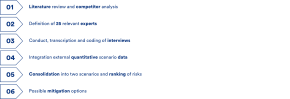
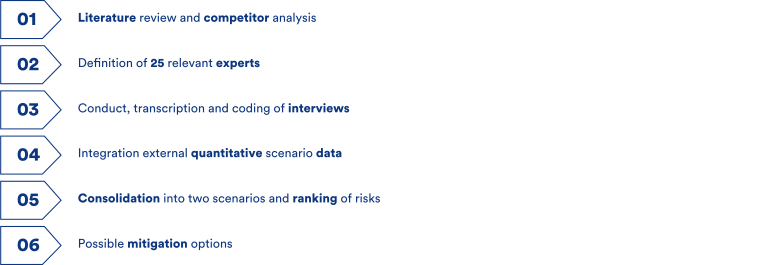
In accordance with the recommendations from the TCFD, the Emmi Group analysed the following risk categories as part of the scenario analysis: legal and regulatory risks, technology risks, market risks, reputational risks, acute physical and chronic physical risks. The company further subdivided them on the basis of competitor risk reports. In addition, the risks and opportunities identified by the World Business Council for Sustainable Development (WBCSD) were taken into account.
The scenario analysis showed that the Emmi Group’s strategy includes the following elements, which can be adapted to the changing and future opportunities and risks arising from climate-related issues:
- The dairy leader in Switzerland: If the Emmi Group does not meet its targets as a leading Swiss milk processor, this could lead to higher procurement costs and possible damage to the company’s reputation. The loss of trust would lead to an aversion towards branded products and adversely affect customer relationships, which could have a negative impact on organic growth and reduce the profitability of the Emmi Group. The Emmi Group sees opportunities primarily in long-term relationships with its suppliers and in closer collaboration.
- An innovative leader in selected niches: If the Emmi Group lacks the raw materials it needs to pursue innovation due to changing climatic conditions (e.g. global warming), there is a risk that the company will be unable to develop these materials or use them on the market. This could prompt customers and consumers to shift away from the Emmi Group in increasing numbers. The Emmi Group is working continuously to offer innovations in line with relevant consumer trends to its consumers at all times.
- Excellent in what we do: Failure to meet climate targets would be tantamount to a sustained negative impact on the environment and it could damage the reputation of the Emmi Group. The Emmi Group would no longer be perceived as responsible, which could make it increasingly difficult to attract and retain employees. The Emmi Group would also no longer live up to its claim to be a role model when it comes to sustainability.
Risks assessed as substantial and corrective actions at operational level, as identified based on the scenario analysis for such risks
The most recent evaluation carried out in 2024 identified the following risks with a potential impact on the Emmi Group’s EBIT:
- consumer megatrends shifting towards green food production and sustainable nutrition
- rising average temperature and water scarcity
- biodiversity loss
- costs of taxation of Scope 3 GHG emissions
The following risk-mitigating comprehensive measures were derived based on the scenario analysis for those identified risks deemed to be substantial:
- improve the resilience and flexibility of operations by creating opportunities to shift production volumes between factories.
- strengthen the partnership with farmers (suppliers) to support them in tackling climate-related challenges and provide them with a degree of security.
- build more resource-efficient factories.
- trace vulnerable raw materials (such as coffee, cocoa or coconuts) to prevent procurement from at-risk areas.
- strengthen capabilities and capacities in procurement.
Potential specific remedial actions for individual risks assessed as substantial include:
Rising average temperature and water scarcity
To support farmers in their adaptation strategies and mitigate the financial impact, the increased costs are being passed on to consumers and targeted emission reduction strategies are being implemented in countries such as Switzerland, Chile and Brazil. These measures aim to significantly reduce the financial impact and achieve manageable residual risk over the next decade.
Costs of taxation of Scope 3 GHG emissions
The Emmi Group has launched projects to measure and reduce Scope 3 GHG emissions. These are focussed primarily on the dairy sector and the GHG emissions of agricultural production sites in Switzerland. The findings are to be used internationally; for example, in Chile and Brazil. Strategies include efficient, site-appropriate feeding and the introduction of feed additives. Despite these efforts, residual financial risk is projected, underscoring the continuing need for ongoing strategic adjustments in light of regulatory changes.
Biodiversity loss
The Emmi Group introduced a No-Deforestation Commitment on 31 December 2025, which means its suppliers will be required to comply with biodiversity-friendly agricultural practices going forward. These measures aim to reduce the impact on biodiversity and meet the expectations of consumers and regulators. Despite these efforts, the residual risk remains significant, indicating the need for ongoing management and adaptation strategies.
Dynamic consumer trends
The Emmi Group is continually developing its product range and addressing consumer megatrends such as natural ingredients, health, protein, flexitarian nutrition and enjoyment. As part of these efforts, the Emmi Group is focussing on making existing production processes even more resource-efficient and reducing the GHG footprint of its production sites.
Specific mitigation measures for other individual risks that do not have a substantial impact on EBIT include:
Impact of extreme weather events on the supply chain
The Emmi Group is focussing on improving the resilience of its supply chain through strategic procurement, supplier diversification and global crisis management training. Despite the efforts made, a residual risk always remains. This highlights the ongoing vulnerability of the Emmi Group’s production sites to extreme weather conditions and underscores the need for comprehensive adaptation strategies.
Taxes relating to Scope 1 and 2 GHG emissions
The Emmi Group has initiated a comprehensive transition plan to reduce Scope 1 and 2 GHG emissions (see section Transition plan for Scope 1 and Scope 2 GHG emissions). The Emmi Group’s financial commitment to these mitigation efforts is considerable. Although these investments are intended to reduce the potential tax impact, the Emmi Group expects a residual risk to remain over the next decade.
Packaging (plastic): cost increase due to legal provisions, consumer acceptance or availability
The Emmi Group is currently assessing alternative packaging concepts. The company wishes to switch to recycled materials and strives to establish a stronger circular economy. These steps entail significant costs for the Emmi Group, but they are nevertheless critical in order to comply with the new regulations and ensure consumer acceptance. Some of these additional costs could be passed on to customers and consumers. Despite these efforts, residual risks remain as the regulatory environment and consumer expectations are constantly changing.
Integrating climate-related impacts, opportunities and risks into the strategic and financial planning process
Sustainability is not only an operational issue for the Emmi Group but also influences its financial strategy and capital allocation decisions. This includes investing in green technologies such as renewables, energy-efficient facilities and sustainable supply chain practices. The Emmi Group recognises that financial resilience is required to deal with the potential impacts of climate change. For this reason, the Emmi Group considers it crucial to have sufficient capital reserves, maintain access to different sources of financing and have the opportunity to adapt the capital structure if necessary.
In addition, climate issues are taken into account as standard in planning as part of the Group’s rolling forecasting process. In order to monitor the reduction of GHG emissions, the Emmi Group compiled an internal project pipeline (Sustainability Action File (SAF)) in 2023, which is maintained at Group level and updated by the responsible legal entities. The pipeline lists all possible new and ongoing projects to reduce GHG emissions while also showing historical GHG emissions. The Emmi Group considers it important to measure how well the targets are being met in terms of reductions and the financial impact of these projects (both in terms of costs and income). The pipeline serves as a forecasting tool for potential GHG savings in the future. In 2025, the SAF was updated to include more user-friendly features, a stronger link to CAPEX planning, and greater flexibility to ensure faster adaptation to new circumstances.
When evaluating projects for their GHG emissions as part of the SAF list, the Emmi Group in Switzerland applies an internal carbon price of CHF 120 per tonne of CO2 equivalent. For the sake of simplicity, this is also used for other countries. This value is based on the CO2 price in Switzerland (tax) that every consumer of fossil fuels has to pay. The internal CO2 reference price embodies the reference costs for saving one tonne of CO2 equivalent. A cost ratio (costs per tonne of CO2 equivalent saved) is calculated for each project. This serves as a basis for decisions on investments in measures to reduce energy or GHG emissions.
In the reporting year, the Emmi Group developed a short-term transition plan through to 2031, which is aligned with the reduction path of the Science Based Targets initiative (SBTi). While SAF covers a range of projects – including smaller, locally owned initiatives – the new document served as a temporary tool to simplify internal alignment. This plan provided an overview and targeted management of the most important GHG reduction projects in the individual divisions. It highlights the key initiatives required in the short to medium term to ensure the Emmi Group stays on track with regard to its long-term climate commitments. The aim of this additional document was to create a clearer, simpler basis for communication for management during the transitional period and to facilitate oversight.
The Group Executive Management also reviews market and product innovations on an ongoing basis in a formal meeting (the Growth Council). New production processes are also reviewed to ensure new technologies can be identified at an early stage and adopted if necessary.
Investments in a diversified packaging portfolio are essential in order to have different options available depending on consumer acceptance and packaging regulations.
In view of the risk of higher temperatures and water scarcity, it is important to make recipes more resilient, such as by replacing one ingredient with another. This is ensured through a gatekeeping process that ensures appropriate involvement of R&D, Operations and Procurement.
To reduce the risks associated with the use of plastic packaging, the Emmi Group wants to switch to recyclable packaging materials and increase the proportion of recyclates. The same process as described above is applied.
The Emmi Group’s capital management process governs the approval of all investments. The approval document contains specific sections detailing the impact on sustainability (including climate change). Climate-related risks are therefore taken into account when assessing such investments. Depending on these assessments, certain corrective measures must be included in the investment application.
To reduce the risk of biodiversity loss, the Emmi Group and its downstream partners in the value chain must undertake targeted activities to promote biodiversity at production sites or invest in research to bring about more sustainable dairy production.
All climate issues are formally listed in detail as part of the capital approval process. A formal ESG and sustainability assessment is part of the process for all M&A activities.
Overarching vision for reducing greenhouse gas emissions
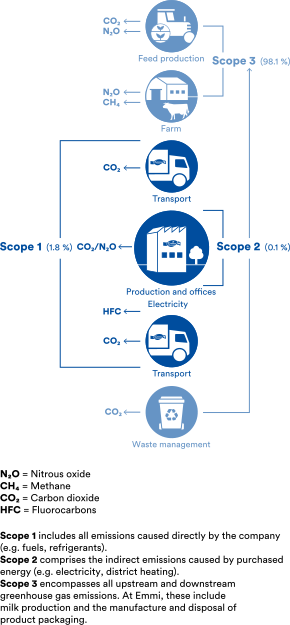
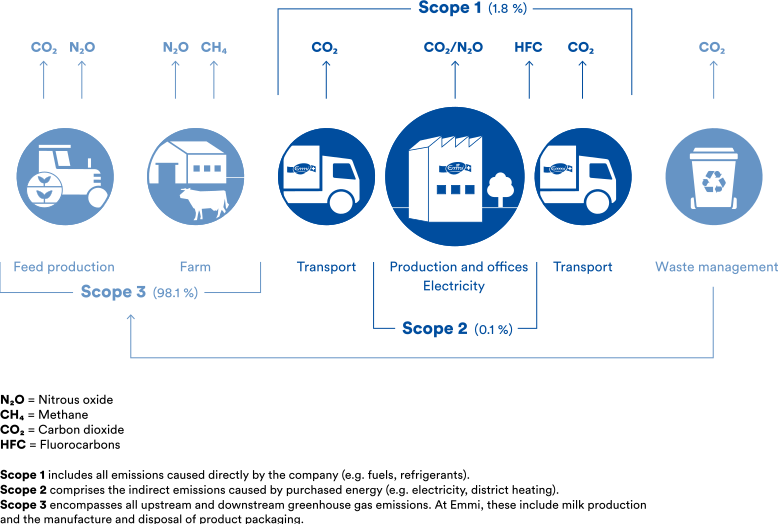
The Emmi Group is pursuing the netZERO 2050 vision and aims to align itself with a scientifically sound emission reduction pathway that is in line with the target of limiting global warming, as set at the 2015 UN Climate Change Conference in Paris. In doing so, the Emmi Group undertakes to reduce GHG emissions directly and along its value chain. This applies to dairy farming, the production of other agricultural raw materials, trade, consumption by consumers, waste disposal and all transportation between the different entities in the value chain. The most relevant greenhouse gases in this context are carbon dioxide (CO2), methane (CH4) and nitrous oxide (N2O). However, the Emmi Group includes all relevant greenhouse gases in its calculations, including coolants. The chart below provides an up-to-date overview of the pro rata distribution of GHG emissions along the Emmi Group’s value chain.
GHG emissions along the Emmi value chain
The Emmi Group had its first science-based interim reduction targets validated by SBTi in 2021 (base year 2019). In the reporting year, the Emmi Group recalculated and validated its climate targets for the following reasons:
- Threshold exceeded due to company acquisitions and new primary data: various acquisitions in 2024 and the new primary data for the emissions factor “milk” led to significant changes in the Group’s emissions profile and an emissions deviation of more than 5% (in relation to the 2019 baseline). This required a recalculation in accordance with the SBTi guidelines.
- SBTi FLAG requirements: the adoption of the Forest, Land and Agriculture (FLAG) standard by the SBTi requires companies with relevant land-use emissions to set separate targets.
The new science-based, short-term interim reduction targets are as follows:
- The Emmi Group’s absolute direct and indirect greenhouse gas emissions (Scopes 1 and 2) are to be reduced by 46.2% by 2031 compared with the base year of 2023. This target includes land-based emissions and the extraction of bioenergy feedstocks.
- The Emmi Group’s absolute indirect non-FLAG greenhouse gas emissions (Scope 3) are to be reduced by 46.2% by 2031, and absolute indirect FLAG greenhouse gas emissions (Scope 3) are to be reduced by 33.3% by 2031.
- In this context by the end of 2025, the Emmi Group committed to procure only raw materials that have been sourced without deforestation for relevant raw materials at risk of deforestation. In addition, the Emmi Group commits to ensure from the start of application of the EUDR Regulation that all raw materials specified in the law are sourced from supply chains that have been deforestation-free since 31 December 2020.
The Emmi Group has decided to set its Scope 3 targets on the basis of an absolute reduction. This approach increases transparency, allows for better comparability with other companies and is in line with climate research, which calls for absolute emission reductions. Milk accounts for more than half of the Emmi Group’s Scope 3 FLAG GHG emissions. This replaces the previously set Group-wide target to reduce GHG emissions by 25% per kg of milk purchased. For Switzerland, the Emmi Group is adhering to the reduction target of 20% by 2027 as part of the KlimaStaR Milk project. The Emmi Group is continuing to rely on energy analyses and reduction measures to meet the direct GHG emission reduction targets. The Emmi Group aims to meet an increasing portion of its remaining energy requirements with alternative energy sources.
On an indirect level, targets and measures in other environmental areas (see sections 3.6 Reducing water use, 3.7 Packaging, 3.10 Food waste, 3.12 Waste) also contribute to reducing greenhouse gas emissions.
Long-term, validated targets to be reached by 2050, as required by SBTi as part of the net zero commitment, do not yet exist. Despite this, achieving net zero by 2050 remains the Emmi Group’s long-term vision.
Transition plan for Scope 1 and Scope 2 GHG emissions
The key elements of the Emmi Group’s transition plan include:
- improving energy efficiency and optimisation,
- electrification of sites,
- complete transition to green electricity,
- conversion of selected large-scale production sites to renewable energy sources (heat),
- replacement of climate-harming coolants, and
- conversion of the fleet to alternative technologies (e.g. hydrogen or electricity).
As an example, the Emmi Group uses technologies such as state-of-the-art pumps, engines and heat recovery processes to improve energy efficiency. When it comes to the supply of process heat, the Emmi Group is adhering to its decision to no longer invest in plants based on fossil fuels. Replacing fossil fuels with renewable alternatives and optimising processes are further levers for reducing direct GHG emissions. District heating and solar energy (especially on the roofs of the company’s production facilities) along with heat pumps (powered by green electricity) have proven to be viable alternative energy sources. Wood can also be used effectively as a renewable energy source, especially where it is available regionally, managed sustainably and used efficiently.
The Emmi Group promotes the in-house production of renewable electricity and heat. The company’s aim by the end of 2025 was to cover at least 4% of its global electricity consumption with solar power generated in house. The target has been achieved, with the current figure standing at 7%.
The Emmi Group sources renewable electricity from local hydro, solar or wind power, depending on availability. For the Emmi Group, connecting to a district heating network is possible only if the heat is generated from renewable energy sources or from waste heat. In implementing its strategy, the Emmi Group intends to focus even more strongly on reducing greenhouse gas emissions in future. To this end, specific roadmaps to meet the emission reduction targets by 2031 are to be defined in 2026 for all the Emmi Group’s key production sites and from the Group’s perspective. A biomass plant in Pitrufquén, Chile, is planned for 2026 as a specific measure to further reduce Scope 1 GHG emissions.
Further efficiency measures are also planned and have already started at the Etten-Leur site in the Netherlands. In Spain, heat pumps and other optimisation measures were evaluated in the reporting year and a reduction plan drawn up. The first reductions were made in 2025. In addition, the company’s in-house PV capacity for generating green electricity is set to be expanded. For example, two PV projects were implemented at the Gattico site in 2025. In Switzerland, the gradual switch to electric vehicles started in 2025.
A primary focus in 2025 was the division Americas, in particular the sites in Tunisia and Chile, where above-average emissions were reported. On-site teams were deployed to comprehensively assess the risks and opportunities there. A tailor-made roadmap was developed together with local experts. In future, there will be more frequent inspections and faster repairs in the event of coolant or air leaks. The cooling systems at the sites are set to be improved and the energy consumption of the machines is to be reduced by setting parameters to ensure they are optimal.
Transition plan for Scope 3 GHG emissions
Purchased milk currently accounts for 80% of the Emmi Group’s Scope 3 GHG emissions. GHG emissions are highly dependent on the local situation and the production system. The range extends from very low values in grassland-based systems such as those in Switzerland (see chart below) to higher values in systems with lower production; e.g. at some production sites in Brazil. Before a proper transition plan can be defined, the Emmi Group is therefore focussing on measuring a baseline (footprint) for all relevant regions (Switzerland, Chile and Brazil) with regard to milk volume and GHG emissions. At the same time, the Emmi Group is involved in pilot projects (e.g. KlimaStaR in Switzerland) to test reduction measures and then gradually roll them out on an international level. It has proven crucial for the Emmi Group to collaborate with other stakeholders along the entire value chain.
The natural biological carbon cycle
Grassland is a key agricultural resource and accounts for two thirds of the world’s agricultural land. It secures nutrition, provides important ecosystem services and contributes to climate protection. Only ruminants such as cows are able to make grassland usable for human nutrition. They turn plant protein from grasses that humans cannot digest into high-quality food protein. Cows absorb carbon when grazing, while ruminating produces methane.

Cows are extremely efficient at converting grass into valuable proteins and nutrient-rich foods that humans can digest. The methane released into the air by cows after digestion is broken down into CO2 and water (H2O) within ten years. Plants growing in meadows absorb both during photosynthesis and release oxygen (O2). The CO2 is then stored in the soil.
This cycle demonstrates that emissions from milk production cannot be viewed in isolation, but rather in conjunction with how they interact with natural processes. At present, this factor is usually not taken into account in the current models and key figures. The Emmi Group’s transition plan for Scope 3 GHG emissions is intended to anticipate this factor by raising awareness of the current structures and gradually developing systems in the individual relevant regions that take this element into account.
3.5.3 Risk management
The Emmi Group has established a risk management process that has been approved by the Board of Directors. The risk management guidelines define the structured process for systematically identifying, analysing and evaluating relevant risks (including climate-related risks). Risks are assessed in terms of their probability of occurrence and extent. The risk management process integrates bottom-up (from local teams, experts, companies, countries) and top-down (from Board of Directors, Group Executive Management) perspectives. Short-term time horizons (three years) and long-term time horizons (ten years) are taken into account and reflected in the three divisions (Switzerland, Europe and Americas).
As part of this process, the identified climate-related risks and opportunities, including current and future regulatory requirements related to climate change, are discussed annually by Group Executive Management and classified according to their potential size and scope. The results of this analysis by Group Executive Management are then presented to and approved by the Board of Directors. Significant opportunities and risks are continuously monitored and, if necessary, discussed in the monthly meetings held by Group Executive Management and in the meetings held by the Board of Directors.
The risk management process is coordinated by the Head Internal Audit. The CEO determines the risk owners together with Group Executive Management and defines measures to mitigate the risks. Risk management is carried out actively with the relevant management teams of the Group companies and Group divisions.
To assess climate risks and opportunities in 2024, the Emmi Group followed the recommendations set out by the TCFD and used both qualitative and quantitative data. Quantitative data was sourced from the Intergovernmental Panel on Climate Change (IPCC), the Wharton Research Database (WRD) and the Network for Greening the Financial System (NGFS) and focussed on physical and transition risks. The WRD data was especially helpful when analysing climate risks, comparing it with that of competitors and as part of benchmarking under different scenarios. The IPCC data was used to analyse the physical risks of the Emmi Group’s sites. The selection of interview partners for qualitative data collection and the selection of four high-risk farms for detailed analysis were based on the IPCC data, which involves examining the impacts of climate factors over time. In addition, the NGFS provided the price trajectory for carbon emissions. The Emmi Group collected qualitative data in interviews with 21 internal stakeholders and four external stakeholders and supplemented this with research on climate scenarios.
The metrics for water, energy and GHG emissions are used by the Emmi Group to assess and monitor climate-related risks and opportunities in line with the strategy and risk management process. Current information on these metrics can be found on water in section 3.6 Reducing water use and on energy and GHG emissions in section 3.5.4 Metrics, goals and measures.
The Emmi Group’s analysis in 2024 covered both the supply chain and direct operations. The analysis focussed on milk, a critical resource, particularly with regard to physical risks. Four key production sites were analysed for their financial importance and possible impacts of climate change in order to prioritise critical areas and operating resources. No new risk analysis was carried out in the reporting year. However, the results of the previous year’s analysis were reviewed and, with the exception of a few adjustments, continue to apply in the present.
Climate change currently has no impact on the Emmi Group’s short-term risks. Nevertheless, these will be taken into account in the short term if this should change. In the case of long-term risks to which all climate-related risks have previously been assigned, these are included as business risks as part of strategic long-term planning.
Risk management and internal controls
3.5.4 Metrics, goals and measures
In terms of climate reporting, transparent metrics, clear goals and concrete measures are key to ensuring transparency with regard to the progress made in dealing with climate-related risks and opportunities. This sub-section provides an overview of the development of GHG emissions and energy, two of the three metrics used by the Emmi Group to measure, current progress in achieving the targets and the measures taken in the reporting year. Information on the third metric, water, can be found in section 3.6 Reducing water use.
Tables with GHG emissions and energy metrics
|
Emissions |
|
|
|
|
|
|
|
|
|
|
|
Direct GHG emissions (Scope 1) |
|
2025 1) |
2024 2) |
Base year 2023 2) |
|
Fuels |
tCO 2 e |
85,628 |
77,068 3) |
77,397 3) |
|
Refrigerants |
tCO 2 e |
12,694 |
15,693 3) |
10,299 3) |
|
Transport/fuels |
tCO 2 e |
13,226 |
12,800 3) |
12,799 3) |
|
Waste water treatment |
tCO 2 e |
5,750 |
4,888 3) |
5,163 3) |
|
Total |
tCO 2 e |
117,298 ▲ |
117,579 3) 4) |
115,815 3) |
|
Biogenic CO 2 e emissions |
tCO 2 e |
81,557 |
70,778 |
84,531 |
|
|
|
|
|
|
|
Energy indirect GHG emissions (Scope 2) |
|
2025 |
2024 2) |
Base year 2023 2) |
|
Market-based |
|
|
|
|
|
Electricity (market-based) |
tCO 2 e |
3,028 |
5,442 |
8,869 |
|
Other (district heating) |
tCO 2 e |
337 |
352 5) |
326 5) |
|
Total |
tCO 2 e |
3,365 ▲ |
5,794 4) |
9,164 |
|
Location-based |
|
|
|
|
|
Electricity (location-based) |
tCO 2 e |
45,000 |
40,715 |
42,094 |
|
Other (district heating) |
tCO 2 e |
337 |
352 5) |
326 5) |
|
Total |
tCO 2 e |
45,337 ▲ |
41,067 4) |
42,420 |
|
|
|
|
|
|
|
Other indirect GHG emissions (Scope 3) |
|
2025 |
2024 2) |
Base year 2023 2) |
|
Purchased goods and services (category 1) |
tCO 2 e |
5,821,811 |
5,562,803 |
5,591,654 |
|
Of which attributable to milk |
tCO 2 e |
3,813,866 |
3,664,314 |
3,814,688 |
|
Other 6) |
tCO 2 e |
559,871 |
607,732 |
547,798 |
|
Total |
tCO 2 e |
6,381,682 |
6,170,534 |
6,139,452 |
|
|
|
|
|
|
|
Of which attributable to other indirect GHG emissions (Scope 3 Non-FLAG) |
|
2025 |
2024 2) |
Base year 2023 2) |
|
Purchased goods and services (category 1) |
tCO 2 e |
345,025 |
282,631 |
248,748 |
|
Of which attributable to packaging (production) |
tCO 2 e |
215,308 |
164,342 |
130,507 |
|
Downstream transportation and distribution (category 9) |
tCO 2 e |
150,844 |
123,955 |
121,928 |
|
Upstream transportation and distribution (category 4) |
tCO 2 e |
124,575 |
122,311 |
121,445 |
|
End-of-life treatment of sold products (category 12) |
tCO 2 e |
109,289 |
160,619 |
131,616 |
|
Other 7) |
tCO 2 e |
175,163 |
200,847 |
172,810 |
|
Total |
tCO 2 e |
904,896 |
890,363 |
796,547 |
|
|
|
|
|
|
|
Of which attributable to other indirect GHG emissions (Scope 3 FLAG) |
|
2025 |
2024 2) |
Base year 2023 2) |
|
Purchased goods and services (category 1) |
tCO 2 e |
5,476,786 |
5,280,171 |
5,342,906 |
|
Of which attributable to milk (excl. purchased milk UHT) |
tCO 2 e |
3,802,258 |
3,654,822 |
3,807,899 |
|
Of which attributable to purchased cheese |
tCO 2 e |
636,709 |
514'853 |
534'616 |
|
Of which attributable to trading |
tCO 2 e |
537,178 |
534,714 |
326,107 |
|
Other 8) |
tCO 2 e |
500,641 |
575,782 |
674,284 |
|
Total |
tCO 2 e |
5,476,786 |
5,280,171 |
5,342,906 |
|
|
|
|
|
|
|
GHG emissions intensity (Scope 1, 2 market-based and 3) 9) |
|
2025 |
2024 2) |
Base year 2023 2) |
|
Sales intensity |
tCO 2 e per KCHF sales |
1.37 |
1.44 |
1.47 |
|
Underlying sales |
KCHF |
4,745,691 |
4,348,812 |
4’242’407 |
|
Milk intensity |
tCO 2 e per tonne of milk |
3.14 |
3.15 |
3.28 |
|
Underlying milk quantity |
t |
2,064,542 |
1,995,184 10) |
1,917,020 10) |
|
|
|
|
|
|
|
GHG emissions (Scope 1 and 2 market-based) by division |
|
2025 |
2024 2) |
Base year 2023 2) |
|
Division Switzerland |
tCO 2 e |
39,007 |
36,178 |
38,127 |
|
Division Europe |
tCO 2 e |
19,209 |
21,214 |
23,029 |
|
Division Americas |
tCO 2 e |
62,447 |
65,981 |
63,824 |
|
Total |
tCO 2 e |
120,663 |
123,373 |
124,979 |
|
|
|
|
|
|
1) In 2025, the applied emission factors were updated.
2) Restatement due to a new calculation basis.
3) Mademoiselle Desserts Group and Verde Campo S.A. are considered in the total, but not in the individual data points. Total Scope 1 GHG emissions of Mademoiselle Desserts Group 2024: 4,105 tCO2e and 2023: 8,931 tCO2e. Total Scope 1 GHG emissions of Verde Campo S.A. 2024: 590 tCO2e and 2023: 1,226 tCO2e.
4) The 2024 figures were validated by KPMG prior to the SBTi recalculation. For the validated values, see the Sustainability Report 2024.
5) Excluding Hochstrasser.
6) Scope 3 GHG emissions for categories 2, 3, 4, 5, 6, 7, 8, 9, 10, 12 and 15 each account for less than 5% and are disclosed collectively. Categories 13 and 14 are not relevant for Emmi Group and are therefore not included. The relevance of category 11 has been assessed and classified as not material.
7) Scope 3 GHG emissions Non-FLAG for categories 2, 3, 5, 6, 7, 8, 10, 11 and 15 each account for less than 5 % and are disclosed collectively. Categories 13 and 14 are not relevant for Emmi Group and are therefore not included.
8) Scope 3 GHG emissions FLAG for sub-categories purchased milk UHT, butter, yogurt, mascarpone, skimmed milk powder, various proteins, fruits, coffee, sugar, trading, cocoa und chocolate, purchased services und other each account for less than 5% and are disclosed collectively.
9) Greenhouse gases included in the calculation: CO2, CH4, N2O, FKW, PFKW, SF6 und NF3.
10) Correction due to revised data and calculation basis.
▲ Audited by KPMG.
|
GHG emissions targets until 2031 |
|
Target 2031 |
Dev. from base year |
2025 |
2024 1) |
Base year 2023 1) |
|
Direct GHG emissions (Scope 1) and energy indirect GHG emissions (Scope 2 market-based) |
tCO 2 e |
-46.2% |
-3.5% |
120,663 2) |
123,373 |
124,979 |
|
Other indirect GHG emissions (Scope 3 Non-FLAG) |
tCO 2 e |
-46.2% |
13.6% |
904,896 |
890,363 |
796,547 |
|
Other indirect GHG emissions (Scope 3 FLAG) |
tCO 2 e |
-33.3% |
2.5% |
5,476,786 |
5,280,171 |
5,342,906 |
1) Restatement due to a new calculation basis.
2) In 2025, the applied emission factors were updated.
Methodology for non-financial figures 2025
The Emmi Group collected and calculated additional data in the reporting year to achieve greater transparency regarding land use change. This data was collected as part of the SBTi recalculation. It became apparent that 73.2% of LUC emissions (Scope 3) are caused by milk, followed by 10.7% for purchased cheese and 10.1% for trading. The remaining categories amount to less than 5% and are classified as non-material. Waste management key figures are not considered relevant to the treatment of opportunities and risks as they represent less than 1% of the GHG footprint.
|
Energy 1) |
|
|
|
|
|
|
|
|
|
|
|
Purchased primary energy by energy source |
|
2025 a) |
2024 |
2023 b) |
|
Heating oil |
MWh |
9,990 |
11,746 |
16,687 |
|
Natural gas 2) |
MWh |
358,299 |
352,071 |
327,444 |
|
Biogas 2) |
MWh |
26,151 |
21,311 |
16,191 |
|
Diesel |
MWh |
3,842 |
10,335 3) |
4,703 |
|
Wood |
MWh |
216,852 4) |
172,186 |
191,943 |
|
District heating |
MWh |
57,352 |
59,199 |
57,153 |
|
Others 5) |
MWh |
3,588 |
26,214 |
18,315 |
|
Total |
MWh |
676,074 |
653,062 |
632,436 |
|
|
|
|
|
|
|
Share of purchased primary energy by energy source |
|
2025 a) |
2024 |
2023 b) |
|
Heating oil |
|
1.5% |
1.8% |
2.6% |
|
Natural gas 2) |
|
53.0% |
53.9% |
51.8% |
|
Biogas 2) |
|
3.9% |
3.3% |
2.6% |
|
Diesel |
|
0.6% |
1.6% |
0.7% |
|
Wood |
|
32.1% |
26.4% |
30.3% |
|
District heating |
|
8.5% |
9.1% |
9.0% |
|
Others 5) |
|
0.5% |
4.0% |
2.9% |
|
|
|
|
|
|
|
Energy consumption within the organisation |
|
2025 a) |
2024 |
2023 b) |
|
Electricity consumption (incl. cooling consumption) |
MWh |
292,649 |
281,108 |
261,243 |
|
Steam consumption (purchased, incl. heating consumption) |
MWh |
57,352 |
59,199 |
57,153 |
|
|
|
|
|
|
|
Total energy consumption within the organisation |
|
2025 a) |
2024 |
2023 b) |
|
Total |
MWh |
933,523 |
892,796 |
859,313 |
|
|
|
|
|
|
|
Electricity sold for consumption |
|
2025 a) |
2024 |
2023 b) |
|
Electricity sold |
MWh |
3,337 |
6,372 |
3,914 |
|
Total |
MWh |
3,337 |
6,372 |
3,914 |
|
|
|
|
|
|
|
Fuel consumption by vehicles |
|
2025 a) |
2024 |
2023 b) |
|
Petrol |
l |
771,948 |
676,905 |
669,824 |
|
Diesel |
l |
4,304,430 |
4,286,153 |
4,362,505 |
|
Hydrogen |
t |
12.84 |
11.06 |
11.17 |
|
|
|
|
|
|
|
Fuel consumption from renewable sources |
|
2025 a) |
2024 |
2023 b) |
|
Biogas |
MWh |
26,151 |
21,311 |
16,191 |
|
Wood |
MWh |
216,852 4) |
172,186 |
191,943 |
|
District heating |
MWh |
57,352 |
59,199 |
57,153 |
|
Other |
MWh |
180 4) |
26,154 |
6,795 |
|
Total |
MWh |
300,536 |
278,850 |
272,082 |
|
|
|
|
|
|
|
Total fuel consumption from non-renewable sources |
|
2025 a) |
2024 |
2023 b) |
|
Natural gas |
MWh |
358,299 |
352,071 |
327,444 |
|
Heating oil |
MWh |
9,990 |
11,746 |
16,687 |
|
Diesel (generators) |
MWh |
3,842 |
10,335 3) |
4,703 |
|
Other |
MWh |
3,407 |
59 6) |
11,521 |
|
Total |
MWh |
375,538 |
374,211 |
360,355 |
|
|
|
|
|
|
|
Energy intensity 7) |
|
2025 a) |
2024 |
2023 b) |
|
Energy intensity (per t of product 8) ) |
MWh/t |
0.66 |
0.66 |
0.64 |
|
Product 8) ) |
t |
1,423,589 |
1,353,938 |
1,336,041 |
|
|
|
|
|
|
|
Electricity consumption by share renewable and non-renewable |
|
2025 a) |
2024 |
2023 b) |
|
Renewable share |
MWh |
265,638 |
247,408 |
227,821 |
|
Non-renewable share |
MWh |
27,011 |
33,700 |
33,422 |
|
Total |
MWh |
292,649 |
281,108 |
261,243 |
|
Renewable share in % |
|
91% |
88% |
87% |
|
Non-renewable share in % |
|
9% |
12% |
13% |
|
|
|
|
|
|
|
Proportion of renewable electricity purchased |
|
2025 a) |
2024 |
2023 b) |
|
Division Switzerland |
|
100% |
100% |
100% |
|
Division Europe |
|
100% |
100% |
100% |
|
Division Americas |
|
98% |
98% |
93% |
|
|
|
|
|
|
|
Share of primary energy and electricity |
|
2025 a) |
2024 |
2023 b) |
|
Primary energy |
|
70% |
70% |
71% |
|
Electricity |
|
30% |
30% |
29% |
a) Excluding Mademoiselle Desserts Group.
b) Excluding Emmi Dessert USA.
1) Industry-standard presentation in MWh.
2) Partially used for internal electricity production.
3) Higher in-house production with emergency generators due to local power outages. From 2025 onward, decrease as the situation has stabilised.
4) From 2025 onward, values previously recorded under ‘Others’ were correctly assigned to the data point ‘Wood’ due to improved data collection.
5) Renewable and non-renewable purchased primary energy such as dried sewage, sludge, coal and other biomass.
6) Decline due to phase-out of coal utilisation in Loncoche (Chile). Increase from 2025 due to a mineral oil boiler in Loncoche (Chile).
7) The types of energy included in the intensity quotient are electricity, heating, cooling and steam. The quotient takes into account the energy consumption within the organisation.
8) Product = saleable goods.
Methodology for non-financial figures 2025
Reduction of Scope 1 and 2 GHG emissions in the reporting year
In 2025, the Emmi Group was able to reduce its own Scope 1 and 2 GHG emissions by 3% compared to the base year of 2023 (2% compared to the previous year). This was driven by division Europe, which achieved a reduction of 17% compared with the base year and 9% compared with the previous year.
The Scope 1 GHG emissions in the reporting year were at the previous year’s level. Compared to the base year, they recorded an increase of 1.3%. Emissions from refrigerant losses (excluding Mademoiselle Desserts Group) were 23% higher than the base year, but were reduced by 19% compared with the previous year. This reduction is primarily attributable to the efficiency measures implemented at the production facilities in Quillayes Surlat, Chile. Another key driver of Scope 1 GHG emissions is the 11% increase in fuel consumption due to higher production volumes at several sites across all divisions. Adjustments to emission factors and refrigerant losses in division Switzerland also had an impact on emissions.
At the Etten-Leur site in the Netherlands, efficiency gains led to absolute reduction effects, but these were offset by a significant increase in production volume. Nevertheless, the intensity rate improved slightly in the reporting year to 2.26 (2024: 2.34).
At Emmi Dessert Italia, efficiency measures and the additional use of biogas resulted in a reduction of 1,400 tonnes.
The Emmi Group was able to reduce its Scope 2 GHG emissions by a total of 63% compared with the base year of 2023 (or 42% compared with the previous year). The reason for this is the purchase of green electricity certificates by Mademoiselle Desserts UK.
In the reporting year, it was decided in a joint vote of the partners involved that the “Greenpower” innovation project in Dagmersellen should not be continued due to the economic and technological conditions that became apparent during the project’s development. The aim was to contribute to a resilient and cost-effective energy supply at the Dagmersellen site. The use of biogenic energy sources to establish an energy ecosystem was a key component of the joint vision.
At the end of 2024, the Emmi Group was able to reduce its GHG emissions by 25% compared with the base year (2014) (previous target for 2027: 60%). Excluding Emmi Dessert USA (acquisition effect), the reduction compared to the base year would have been 27%.
Scope 3 GHG emissions in the reporting year
Scope 3 FLAG GHG emissions increased in the reporting year by around 3% compared with the base year and by around 4% compared with the previous year. The main driver of this development is the category of purchased cheese, which rose by 19% compared with the base year and by 24% compared with the previous year. The increase is largely attributable to Emmi Roth USA, with an increase of 19 tonnes due to the start of production at the newly established site in Stoughton.
A slight change in Scope 3 FLAG GHG emissions compared with the previous year is also evident due to shifts in volume allocation. For example, UHT milk products from Kaiku that had previously been reported under the category of purchased UHT milk were partly allocated to the trading segment in the reporting year (+0.5% compared with the previous year).
The developments compared with both the base year and the previous year are primarily due to methodological and structural adjustments. In 2025, data collection for purchased raw materials was significantly expanded and supplemented with additional raw materials.
Scope 3 non‑FLAG‑emissions were 14% above the base year and 2% above the previous year. This development is partly attributable to increasing packaging volumes, reflected in the rise of the sub‑category packaging (+65% compared with the base year, +31% compared with the previous year) within category 3.1 Purchased goods and services. The category 3.12 End‑of‑life treatment of sold products recorded a 32% reduction compared with the previous year. This development is largely due to improved data collection: although packaging volumes increased (category 3.1), the more differentiated data collection led to their partial allocation to sub‑categories with lower associated emissions.
Another driver of the increase compared with the base year is category 3.9 Downstream transportation and distribution (+24% compared with the base year). This development is also attributable to improved data collection. The objective going forward is to gradually improve the data basis through the increased use of primary data, thereby enhancing data quality and robustness.
Information on measures and projects can be found in section 3.2 Sustainable dairy.
No-Deforestation
In accordance with the requirements of the Science Based Targets initiative (SBTi), the Emmi Group committed itself at the end of 2025 to procure the raw materials coffee, cocoa, palm oil, animal feed soy, cardboard and corrugated cardboard only from supply chains that have been deforestation-free since 31 December 2020. The publication of the No-Deforestation Commitment also defined the framework for implementing this commitment.
Confirmation of CDP B rating
Since 2017, the Emmi Group has had its sustainability efforts assessed by the Carbon Disclosure Project (CDP). The score has improved over time: the Emmi Group achieved a B rating for the first time in 2021 (2019: B-). With its B rating in 2023, it was above the industry average of B-. The B rating was confirmed again in the 2025 reporting year.
3.5.5 Outlook
In 2026, the Emmi Group will continue to implement its transition plan to reduce Scope 1 and 2 GHG emissions. The focus will be on systematically implementing site-specific roadmaps for 2031 emission reduction targets, so each major production site actively contributes to the Group’s overall decarbonisation strategy.
Improving energy efficiency at all locations remains key. For example, the identified measures will be pursued in Pamplona in 2026. At the plant in the Netherlands, the focus is on optimising heat pumps and the air conditioning project in milk drying, which aims to reduce Scope 1 GHG emissions.
Switching to renewable electricity is also part of the Emmi Group’s strategy. In 2026, the focus is set to shift more strongly to the Group companies acquired in recent years. A milestone in the transition of selected production sites to renewable heat sources is the planned biomass plant in Pitrufquén, Chile, which is being advanced as a flagship project to reduce Scope 1 GHG emissions.
Measures to replace climate-damaging coolants will be taken in Tunisia in 2026, while France is setting course for a complete changeover of its cooling system in 2027. In addition, Emmi Schweiz AG is continuing the gradual conversion of its vehicle fleet to electromobility and is pushing ahead with the transition to low- and zero-emission technologies.
To reduce Scope 3 GHG emissions, the focus remains on dairy production in Chile and Brazil, where there is the greatest leverage. The collection of primary data will be expanded further in 2026. In procurement, pilot projects for non-dairy-based raw materials are being launched in order to identify hotspots and strengthen collaboration with suppliers.