2. Derivation of the material reporting topics
The Emmi Group’s material topics were identified for the first time in the Sustainability Report 2021/2022 by means of a dual materiality analysis, in which the financial materiality and impact materiality were assessed by internal experts. On this basis – and supplemented by a selection of the material topics derived from it – the Sustainability Steering Committee finally validated the materiality matrix and determined the material topics at that time.
For the Sustainability Report 2024, the material topics were critically reviewed by internal experts in consultation with external experts and prioritised based on their position in the matrix in accordance with the requirements of the 2021 GRI Standards. The review led either to adjustments to the topics considered or to a classification of their materiality (see Annual Report 2024, page 175).
The Sustainability Report 2025 will likewise be based on this with no further amendments.
2.1 List of material topics
The Emmi Group’s double materiality matrix
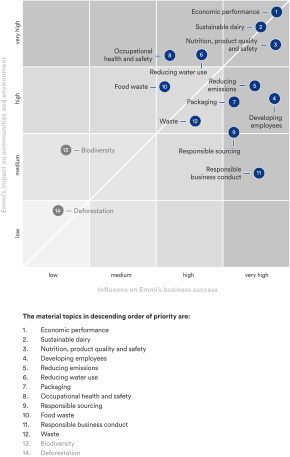
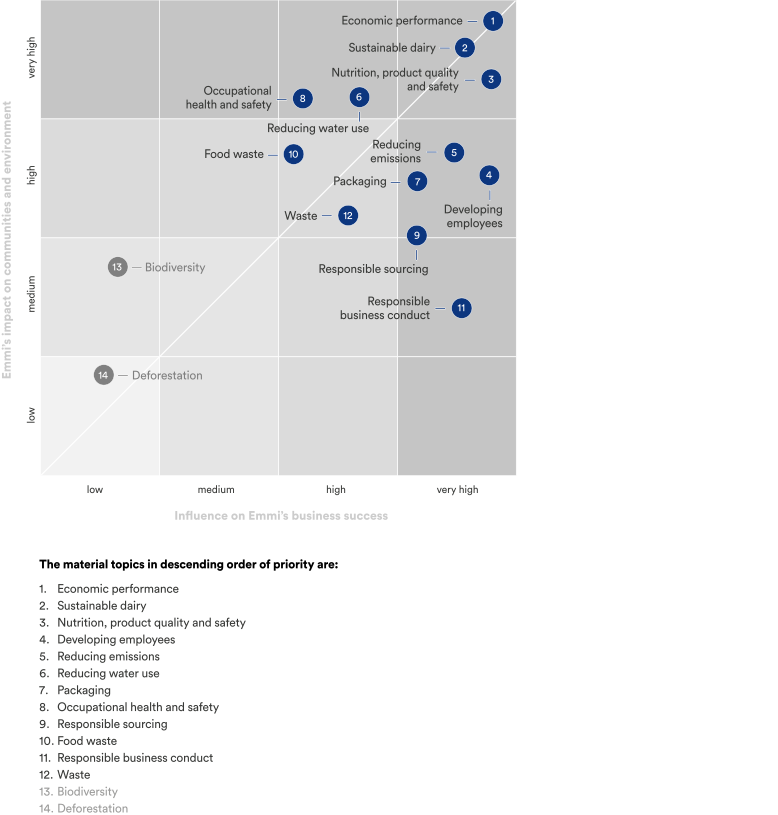
As in the previous year, this report comprehensively covers the first twelve material topics in accordance with the 2021 GRI Standards.
The materiality threshold was defined as a high or very high impact on society and the environment and/or the business success of the Emmi Group. The latter two topics, namely biodiversity and deforestation, were not considered material. The Emmi Group considers these two topics as relevant for the material sustainability topics “Sustainable dairy”, “Reducing emissions” and “Responsible sourcing” and has integrated relevant aspects into the respective sections.
2.2 Outlook
Based on the current legal requirements, the Emmi Group assumes it will have to submit a consolidated sustainability report in accordance with ESRS (European Sustainability Reporting Standards) starting from the reporting year 2028 at the latest. Preparatory work is currently under way with this deadline in mind, including a dual materiality analysis in accordance with ESRS. The projects currently under way to improve Group-wide data collection and consolidation, including adjustments to processes and IT systems, are therefore no longer aligned with the requirements of the GRI Standards, but rather with the requirements specified by ESRS. Data gaps that exist only according to the GRI Standards but not according to the requirements specified by ESRS will no longer be closed.